Cleaner Interview Questions and How to Answer Them
Cleaning interviews are short and practical. These are the questions supervisors actually ask, with answers that sound like a person rather than a script.
Cleaning interviews are usually short, informal chats, often held on the site itself, and the questions test reliability rather than technique. Expect to be asked how you will get there for a5am start, whether you are happy working alone, and what you know about using chemicals safely (COSHH). Honest, specific answers about travel, availability and trust win offers. The legal pay floor of £12.71 an hour covers trial shifts too.
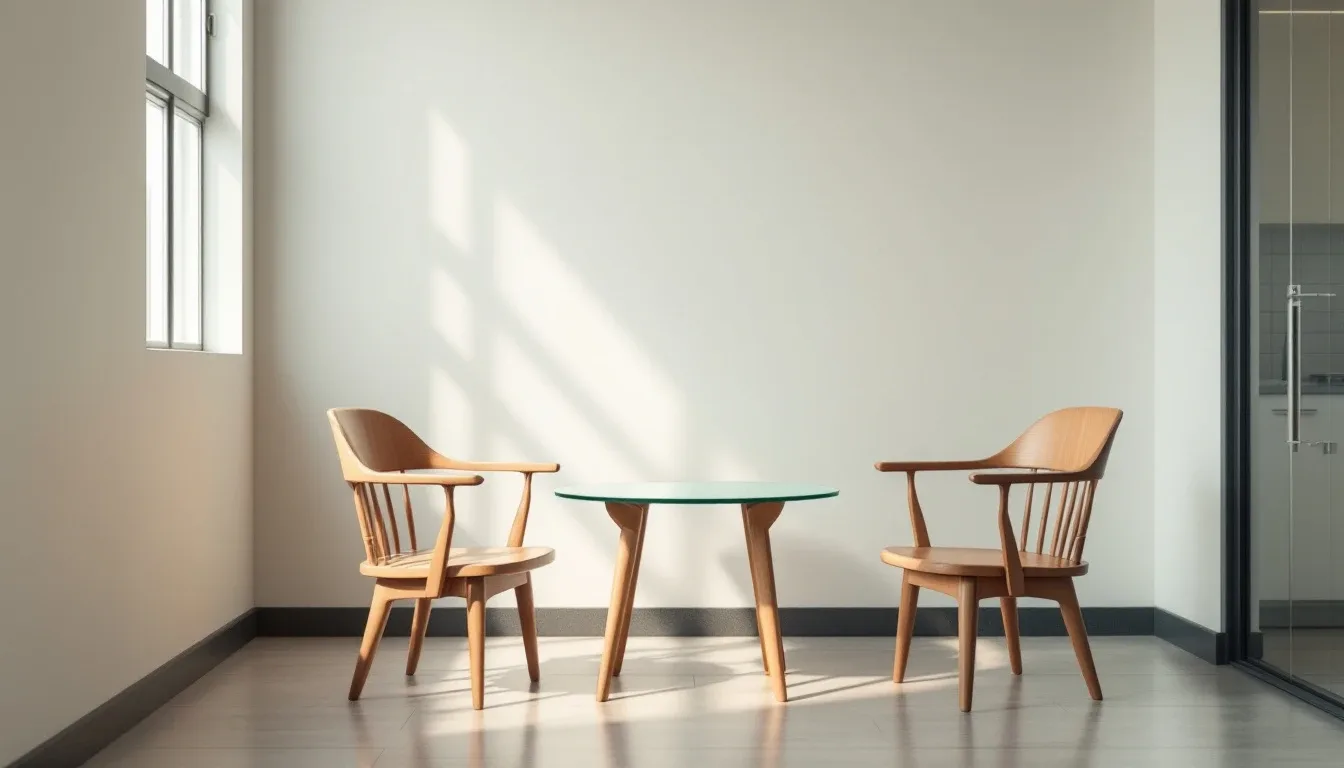
The setup for most cleaning interviews: two chairs and ten minutes.
What is the interviewer really screening for?
Not cleaning skill. Every contract has a spec sheet and every employer trains their own methods, so nobody expects you to know their systems. What a supervisor is buying is certainty: that you will be at the door at the agreed hour, every time, and that the client's building is safe with you in it. Most of the interview is that question asked five different ways. Answer with specifics, the bus route, the backup plan, the referee who will confirm it, and you are most of the way to an offer. If you have not started applying yet, our guide tohow to become a cleaner in the UK maps the routes in; come back here before the interview.
- Typical format
- Short and informal, often on site
- What to bring
- Right to work documents, referee phone numbers
- COSHH stands for
- Control of Substances Hazardous to Health
- Legal floor, including trial shifts (21+)
- £12.71/hour
Reliability and travel questions
"How will you get here for a 5.30am start?" The most common question in the industry, because office contracts clean before the building opens and early buses are sparse. A good answer is a plan, not a promise: "The number 12 runs from my road at 5.05, and it is a 25 minute walk if the bus lets me down." Supervisors have heard "I'll manage" before, from people who did not.
"What would you do if you woke up ill?" They are testing whether you understand the difference between absence and no-show. The right answer: ring the supervisor as early as possible so cover can be arranged, and never simply not appear. A no-show on a keyholder contract means a building that never got cleaned and a client on the phone by 9am.
"Can you pick up extra shifts at short notice?" Answer honestly. Saying yes to everything and then declining every call is worse than a clear "Tuesdays and Thursdays I can, school runs block the rest." Contracts run on cover, and a reliable sometimes beats an unreliable always.
Chemical safety and COSHH
"Do you know what COSHH is?" comes up in most commercial interviews. COSHH is the Control of Substances Hazardous to Health Regulations, the HSE framework that governs chemicals at work1. Nobody expects a recitation. A strong plain answer: "The rules for handling cleaning chemicals safely. I read labels, I never mix products, and I would follow whatever training and data sheets you provide." The never-mix point matters beyond the interview: mixing bleach with other cleaning products can release dangerous gases, which is exactly why employers screen for the attitude. What they want to hear is that you take instructions on chemicals seriously, not that you improvise.
Lone working and keyholding
Much cleaning happens alone in empty buildings, and employers have legal duties to plan for lone workers2, so expect"Are you comfortable working on your own?" Answer with evidence if you have it: a previous solo role, a paper round decades ago, anything showing you self-start without a supervisor watching.
Keyholder questions are the trust test: "You would hold keys and the alarm code for this building. How do you feel about that?" Do not oversell. A calm answer that names your referees and invites the employer to check works better than speeches about honesty. Supervisors listen for whether you treat the responsibility as normal and serious, because to them a lost key is a changed lock across an entire contract.
Setting-specific questions
Hotel housekeeping interviews add pace questions: attendants service 15 to 25 rooms a shift, so expect "How would you keep a standard when the clock is against you?" The answer they want involves routine, the same room order every time, not heroics. School cleaning interviews cover the enhanced DBS check, which the employer arranges and pays for, and term-time patterns. Domestic agency interviews lean on references and discretion in clients' homes, because the agency's name is on your work. Whatever the setting, the underlying screen never changes: turn up, follow the spec, be trustworthy.
Questions worth asking them
Asking nothing reads as indifference, and the useful questions are practical ones. How many hours are guaranteed, and are extra shifts offered around them? Who supplies materials and equipment? How does cover work when a colleague is off? When does pay land each month, and is travel between sites paid on multi-site roles? These mark you out as someone who has done shift work before, or thought properly about it. They also surface the detail that decides whether the job fits your week, which matters more in cleaning than in most work, as the shift patterns behind the adverts show on our live job boards.
Questions people ask
What should I wear to a cleaning interview?
Clean, tidy and practical. No suit needed. Many interviews include a walk around the site, so wear shoes you can move in. Turning up five minutes early in presentable clothes answers the reliability question before a word is spoken.
Are trial shifts paid?
If you are doing real cleaning work on a trial, that is working time and the legal minimum of £12.71 an hour for over-21s applies. A short walkthrough of the site is a normal part of interviewing; a full unpaid shift of actual cleaning is not something to accept.
Do I need to know COSHH before the interview?
No. Awareness is enough: it stands for Control of Substances Hazardous to Health, the rules for using cleaning chemicals safely. Training you properly is the employer's job. Saying you always read labels and never mix products shows exactly the attitude they are checking for.
- Health and Safety Executive, "COSHH basics", hse.gov.uk/coshh. Accessed 17 July 2026.
- Health and Safety Executive, "Lone working: protect those working alone", hse.gov.uk/lone-working. Accessed 17 July 2026.
- GOV.UK, "National Living Wage increases to £12.71 per hour", gov.uk/government/news/national-living-wage-increases-to-1271-per-hour. Accessed 17 July 2026.
Last reviewed 17 July 2026. Checked against the sources above; the statutory pay floor changes every April.